Tuesday, 9 June 2015

A Reversion Story, Part 3 : And Holiness Was Found on Pinterest

Part 1 is here. And click here for Part 2.

So. When you left, Simon and I were getting married, he had joined the local church RCIA and I started planning the wedding. Which is when my sister-in-law advised me to try Pinterest.

So I did.

I found many things there, but after a while, I found them to be the same pins, put forward over and over again, so I ended up simply browsing. Which is how I ended up clicking on this


I really liked Haley's take on the matter, I thought her perspective was a great one. Her description of true love was enchanting, just as I was about to get married. So I started looking about on her blog, and discovered she was a Catholic. And actually living out her faith. Such strange ideas as Adoration, NFP, devotion to the saints or praying the rosary suddenly were explained and showed to be relevant to my life. Even more than that, they were exciting.

I was blown away.

I also wanted to start celebrating the liturgical year, straight away. 

Haley is also responsible for introducing me to GK Chesterton, and the whole world of the catholic blogosphere.

Now, as this is turning into a "river-novel" as we say in French, I will simply summarize. Through various blogs, I gradually came to know and read more about the teachings of the Church, the issues it faces, and the beauty it contains. I also finally came to trying to agree my lifestyle with my beliefs (that was a tough one - and, really, a forever work-in-progress - but I am very lucky that I have a now-husband-then-fiancĂ© who is much better at these sort of things than I am - I'm all theory!).

So, rather than lose you in the minutiae of all these changes, I have compiled some resources that helped me on my way. 

So here goes:


Blogs 

(I follow many more, but these three were the outstanding ones when it came to understanding what living as a catholic actually looked like.)

Carrots for Michaelmas 

I already mentioned this one, obviously, but it is worth repeating! I particularly loved her series on NFP (I had never heard of it before, didn't even realize the Church opposed contraception) and her beautiful posts on women in the Church, especially her explanation of the place of the Blessed Virgin Mary. Considering my path to reversion, it was music to my ears!

Catholic All Year 

I love Kendra's approach to parenting, but she also has so many fantastic ideas on how to celebrate the liturgical year, I'm a tiny bit impatient for Jude to be old enough to try them out. It is almost impossible to choose, but I think my favourites are her ideas for Michaelmas, Our Lady of the Rosary and Pentecost. But I love them all, and this one and this one can get anyone started.  Also, her printables make a lovely addition to my little oratory.

Like Mother Like Daughter 

Leila has the advantage of hindsight, and as a result what she talks about sometimes seems way ahead of our situation in life, but it always thought-provoking. She (and her daughters) have some great ideas for the liturgical year too, but I think the best way to get a condensed idea of what the blog is like, is to read the book. (I know, it's cheating).

Books
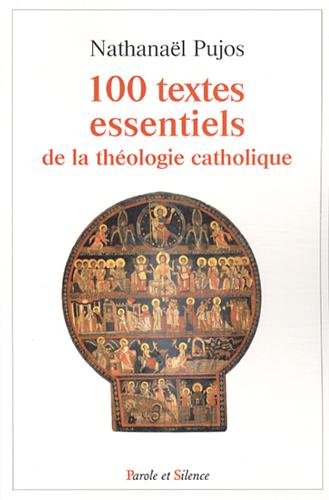


I picked up this one at a catholic library in Paris, as part of an effort to try and understand the teachings of the Church. It is pretty heavy-going, but also divided in short chapters, allowing for lots of pondering time in-between (which is very necessary). I'm still suddenly reminded of a chapter every now and again, as it takes new and sudden meaning in my life.
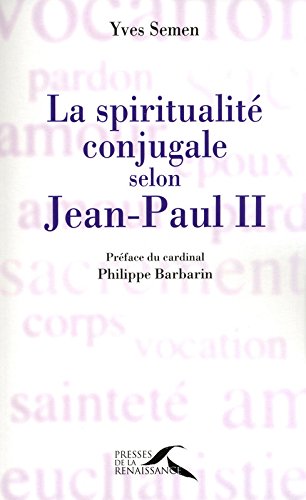


This one was a wedding present. I don't want to go too much into NFP here (others have done it better), but this is the book that explained the Theology of the Body for me, and encouraged us along. 



Orthodoxy was the first Chesterton I read. I then went on a Chesterton-binge and loved it. Funnily enough, he is an author that one of my most aggressively secular friends enjoys as well, and it made for some interesting conversations.



St Thomas Aquinas, or how to finally dispel any misconception you might have about scholasticism. Obviously, Chesterton is a master, and this one does not disappoint. I did try to pray with St Thomas whilst I was a PhD student so that I would be more diligent, but his prayer before study was also great before reading the Bible (he probably soon saw that I was a hopeless case with the PhD). 
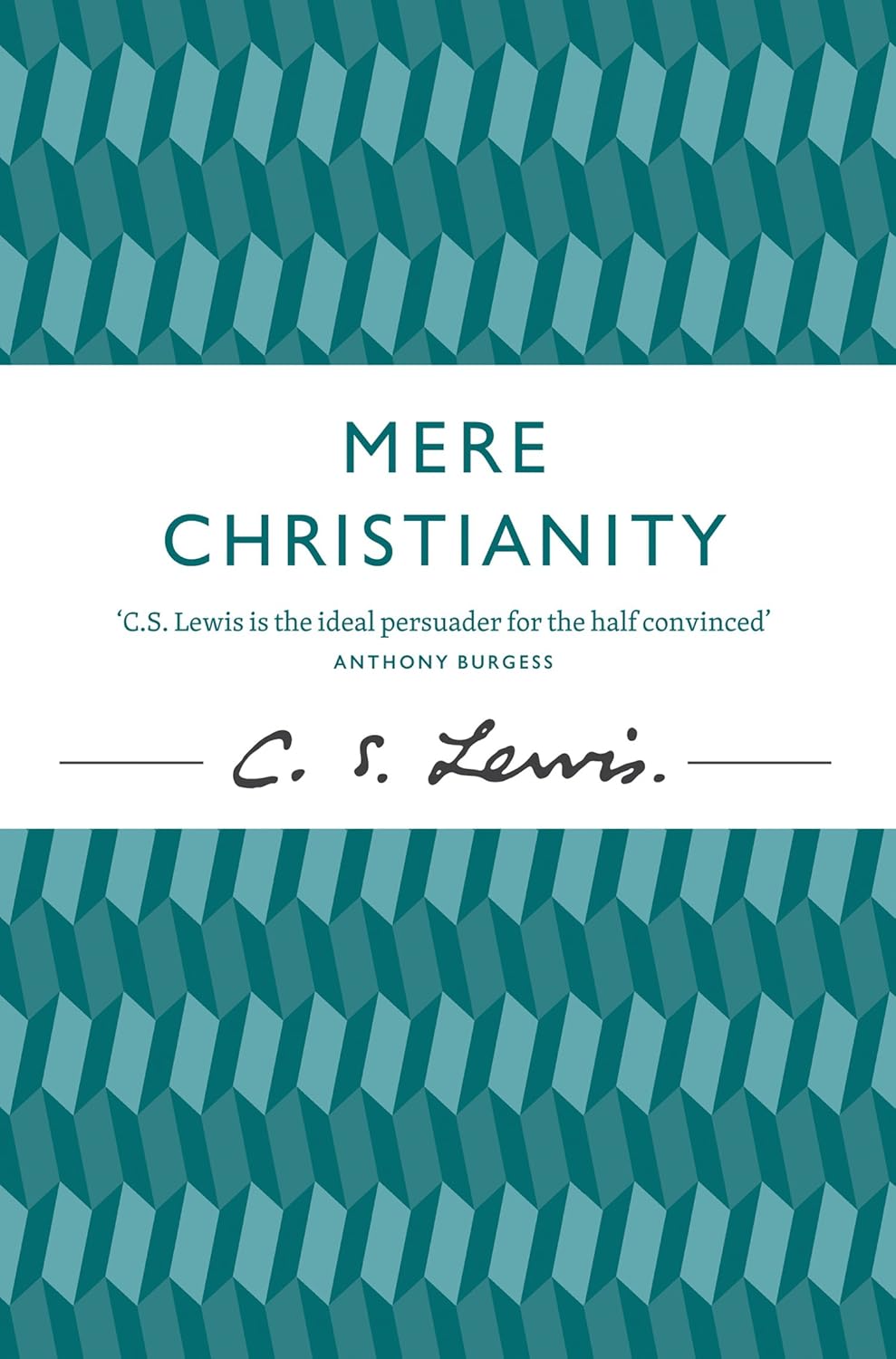


I took a while to read this one, mostly because of Catholic snobism, I am afraid, because I knew that C.S Lewis never converted. Some argue he would have, had he lived in our days, but I am not so sure. I'm with Tolkien on this one. I think he was too much of Ulster to consider Catholicism an option. 
Anyways, this is completely beside the point, because it does not impact in any way the justness of his analyses. I did get over myself eventually, then went on another binge. 
Haven't looked back since.
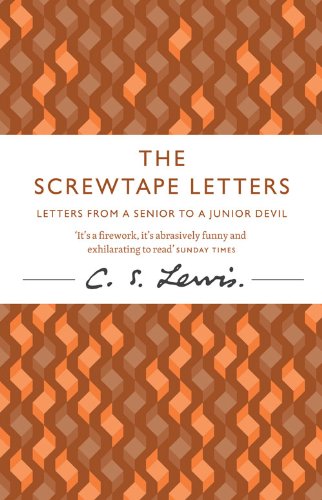


This one followed pretty quickly after Mere Christianity, and apart from the fact that it is very funny, it does make some startling points. My favourite being his remarks on prayer, especially "whatever their bodies do affect their souls". But there are so many more!

So, here goes. It feels very incomplete somehow, but this is the best story line I can muster for my reversion. But, story line is as accurate as I can get, because, in the words of my very favourite book, "you would have to feel with me, else you would never know". 

You totally get imaginary points if you know which book it is ;-) .

Wednesday, 3 June 2015

Why I Left Teaching

When I left teaching, I toyed with the idea of sending a letter to Michael Gove (then Education Secretary). In the end, the obvious futility of the endeavour stopped me. But I rant about education so often, I figured I should probably make it into a post, and give people a chance to rant back.


I think my experience was relatively typical. I worked in a good school, with lovely staff, where people were, for the most part, very supportive of each other. 

And yet...


Test early and often


I won't go into the recent(ish) proposal to start testing kids at the age of 4. FOUR! I think it speaks for itself.

The buzzwords behind constant testing run something like "monitoring progress" or "assess achievement", or "troubleshoot early" or whichever sanitized bit of doublespeak you prefer. The problem is, it leaves no time for teaching.


At least Gradgrind was teaching facts. We're teaching tests.


You think I am exaggerating?

Here is a typical y7 (age 11-12) first term of French at my old school - note that we are still 5 years away from official formal testing - : out of a 12 week term, you take off at least two whole weeks for assessments, one week for end-of-term activities and three weeks to revise, engineer, and in the end copy and learn by heart the assessment itself (because that's what the GCSE is like). So, actual weeks left of teaching actual French words and actual grammar points to actually be able to form actual sentences and actually speak the language? 6. 

They spend half the year on the tests. 

And it shows in their attitude.

When I taught the polite "usted" to Y7 Spanish classes, I generally found a way to come to explain about Juan Carlos II, the dictatorship and the extraordinary recent history of Spain (which is quite important, if you take an interest in the country). Once, a boy, who was generally a keen student, interrupted me saying "What does this have to do with the test?" I told him his outlook on life was sad. But I believe we are making it so.

But why do we spend so long preparing the tests you ask? Why not let the kids just do it, like in the olden days? 

Because everybody needs the kids to succeed. We cannot afford to leave it to chance or the even less reliable work ethic of a pre-teen.


Make everybody have a vested interest in the kids' grades


The problem with this one, is that on paper, it sounds like a good thing. If everybody has (monetary, but not only) incentives to make the kids succeed, that's a great thing! Right!?

Depends what you think education is for. 

Because if we just want kids to all have the qualification at the end, we can just give it to them  at the start without tormenting anybody in the meantime. 


Here you go, Trevor. Well done for existing.


If teachers, schools and exam boards (yup, exam boards as well make their money out of kids getting good grades) all need the children to get a pass in order to get a rise or not be fired, no-one is left who actually needs them to have the knowledge which we are testing them for.

There is no independent party who can fail students without it having a direct impact on their pay or job chances.

And if students can't fail, well, no-one can actually succeed. If everybody gets a GCSE, not only is the GCSE meaningless in itself, but its contents are also gradually de-valued.

GCSEs were meant to represent the learning you had achieved : i.e, you know so much in maths, therefore you get a GCSE in maths. But if everybody needs you to get that GCSE, two things will happen : first, your teacher will teach you only what can be on the test, and spend a lot of time training you in test-taking (half the year, remember? And it gets worse as they get older), second, the exam board will gradually make it easier and easier for you to pass, because they get their money from schools choosing them, and schools need to choose exam boards than can guarantee good grades.

So you are left with test-math only, and as easy a type of test-math as the exam board can get away with.

The only thing suffering in this beautiful bouquet of joint interests, is education.


Destroy the teaching of grammar


Funny stories: 

1: When I was a trainee, I sat in on a class where the lesson was on time phrases. So the teacher wrote on the board:

On Monday's
On Tuesday's
On Wednesday's
On Thursday's
On Friday's
On Saturday's
On Sunday's

And thought nothing of it.

2: I was chatting with other teachers, all native speakers, wondering how to remember when to use practise or practice. I offered: "It's simple, the first one's a verb, the second's a noun."

That was helpful to exactly nobody.


Roughly what I sounded like to them.


And these are educated, conscientious people. With no understanding of grammar. 

Now grammar is essential when you learn a foreign language. Babies learning without it simply learn by heart sentence after sentence, trying them out in different situations, whilst parents correct the mistakes as they arise. That is an extremely time-consuming way of learning a language. No school can afford that much time given up to  foreign languages. So you HAVE to use grammar.

But we don't. We don't have the time, because the task is enormous, as very little has been done (or processed) in primary school, and because tests.

So we take the worst of both worlds: we teach foreign languages by giving students sentence after sentence illustrating the grammar points we are trying to make. As the test only requires them to learn the sentences by heart, they promptly forget the grammar. And after 5 years and a French GCSE, they can't create a single original sentence on their own in French.


Invent moronic ways of testing


Which leads me to the moronic (sorry, but that is the appropriate term) way in which these all-consuming tests are created.

So, how do you test the French of pupils without making sure they can construct a sentence? (Because that'd be hard and the grades would go down at first.)


Old-fashioned test. They didn't know any better.


Easy: you make them learn by heart 200 words they do not understand, and tadaaa! it sounds like they can speak French. 

Unfortunately, as they do not understand grammar, they put these 200 words together by collating the examples you gave them as you tried to teach them the grammar. The teacher knows they are going to do that, and also knows that s/he NEEDS them to get a good grade. So s/he will engineer the examples so that put together, they form a coherent whole.

And the pupils often have absolutely no idea what they are reciting.

Which is incredibly hard. You try learning by heart 200 sounds that don't make any sense! It's tricky. And it doesn't teach you how to speak French. So it is an entirely pointless and extremely difficult exercise. 

And the students are aware of that, so they hate languages, fail to communicate with other Europeans, and fester in the misunderstandings.

Teachers are also aware of that. But it appears their opinion doesn't matter much to test-makers.

I know less about other subjects, but judging by the history students I taught at university and their obsession with bias which left no place for actual knowledge of facts or actual understanding of historical documents, I would say it's probably just as moronic.


Pressure teachers till there's none left


This is the original letter I wrote at the time of my leaving. If you can feel the exhaustion in it, I will have done what I can.


Exhausted. Funny story: neither of us is a teacher there anymore.


Dear Mr Gove,

I am addressing you today because I am about to leave teaching.

I went into the profession with a lot of ideals, a lot of energy, and very little worry about career and money. I wanted to make a difference, this much-snorted at concept. And yet I am leaving. I still think that forming young minds is an amazing thing to be doing, and rapport with pupils is most of the times something extremely rewarding. I loved my job, and yet I am leaving. I am leaving because, no matter how rewarding the job can be, it is not worth it.

In my first year of teaching, I was made to feel incompetent by a parent who was willing to give up half an hour of her time (and mine) to call me, shout at me, then methodically demonstrate to me how I had ruined her daughter’s life.

My fault on this occasion, Mr Gove, was that I had not set homework properly.

You can try and write me off as a truly incompetent teacher as this point if it helps you vindicate your vision of education. The truth is I am not. I am valued, I have an impact on children, I know I inspire them. And yet I am leaving, at the end of this school year. Because the type of vexations I have just described is symptomatic. It did not on its own make me change my career plans, but it is a perfect example of what it feels like to be a teacher today. 

We are expected to be flawless robots, who tick every box it pleases the government to create. Yet we are still supposed to challenge pupils. We have to communicate with parents, fill in data sheets, reports, questionnaires, or any piece of paper-work, yet still innovate and inspire, yet still monitor children's health and well-being, yet still plan lessons in details, and mark their work constantly and positively. 

Did anyone ever pause to calculate exactly how long all this takes? Time 300 pupils?

We are supposed to face challenges, misbehaviours, open criticism, mockery and spite from parents, pupils and journalists and somehow keep ourselves going even if it is at our expense, even if it is at the expense of our families and our own children.

I understand why you would want such teachers, but I personally don’t feel equal to the task. Because in the current state of things, being a teacher is a thankless exhausting task, which does not create any form of recognition from parents, the public or our government.

That is why I am leaving.

Good luck to my fellow teachers, I admire you immensely. 


So that's where education's arrived. I don't know about you, but I am not very keen on it. 

Feel free to disagree or cheer in the comments.

Monday, 1 June 2015

A Reversion Story, Part 2 : And then Our Lady stepped in

I have procrastinated a lot before writing this post. For some reason, (not altogether flattering to me), the first slightly angry and reproachful post wrote itself, but the second, grateful one got stuck.

Here I am though, Lord, tackling the more important one. Sorry it took me so long.

So. Back to where we were. I moved to England, age 21. 

It was a scary, lonely time, but a necessary one. My life in Paris had become associated with failure and unhappiness, and I wanted a do-over, which is what I got.
Nothing quite like suddenly becoming a foreigner to start again from scratch.


In retrospect, there were many signs on my way, especially as for the first two years, I ended up sharing a house with devout Christians (and they are rather thin on the ground in England), one Anglican, the second Catholic. They would offer to take me to church, encourage me, but I wasn't ready. Stubborn girl that I am, it had to seem to come from within for me to listen.

What got to me in the end was foreignness. 
In France, religion is something deeply private, and people rarely talk openly about it. I remember meeting my own cousin and his wife on the metro (I think they were headed to a vigil as Saint John Paul II was dying) and feeling like it was an infringement on my privacy when they offered to take me along. (Pascal and Armelle, I'm sorry I was such a brat!)
In England, on the other hand, I found the subject was openly discussed, and I would be called to account as a cultural Catholic. Now, of course, I could have simply denied the Church, saying I didn't believe, or disagreed, but it felt like a betrayal. So I suddenly found myself in the strange position of defending teachings I knew very little about.


Questions such as: why do you have to pay to see your own pope? (answer: do we?!)


Still, I wasn't going back to church. A few things edged me closer, my grandfather's passing in particular. And yet, I hovered over the edge. I declared myself a Catholic again, but did nothing about it.

And then, I met Simon.


*** Word of warning, an instance of intense soppiness is about to occur, you may scroll down to the less uncomfortable bits ***


What I found then, was that being in love leads to getting a grasp of Love, doesn't it? It certainly did for me. Love just felt otherworldly, and it was a very tangible proof that, of course, God is, and God is Love.


Unrelated cricket pic, to diminish the awkwardness.


*** End of soppiness. I am sorry. ***


So that was the first definite step. And Simon was quite keen to hear my views on religion, as he had been searching for some years by then (Simon's paternal grandparents were staunch Methodists, but the rest of his family are at various stages ranging from indifference to open hostility). He had many questions, I had few answers. However, I did not fully grasp how few answers I had. I was still a Pick&Choose at heart, ignoring the difficult parts, ignoring Our Lady, ignoring the Real Presence, ignoring the active steps one should take beyond mere intellectual conviction.

As Simon and I were planning to move in together (see what I mean about picking and choosing?) we struggled to find an affordable flat for quite a while. Until one night, Simon called me. He had found a really big flat (by European standards), well below our budget, in exactly the right area and in perfect repair. Too good to be true, but absolutely true.


BIG flat.


Directly opposite the flat, was this.


Jennifer Fulwiler has a line about shouting at God, challenging him to answer, then putting your fingers in your ears saying "I can't hear you." Basically, that.


I found it deeply amusing at the time, but that was it.

Then we went on holiday, touring Europe for a month (and spending quite a while at my grandmother's when we ran out of money. Life was tough in those days.)


Tough life.


Whilst I was traveling, one of my childhood friends was in hospital. It seemed benign enough at first , but after a month it was revealed to be a very advanced case of endocarditis. Which led to an emergency transplant, which went very wrong. 
As my friend hovered between life and death, Our Lady stepped in. For the first time in my life I found myself desperately and continuously repeating the words to the Hail Mary, a deep childhood memory spontaneously resurfacing.
And She was there.
She was there when the doctors managed to stabilize my friend's condition.
She was there when she was approved for a full heart transplant.
She was there as we anxiously waited for a suitable donor.
She was there for every trip back to France, holding my hand, as I visited my friend buried under all the tubes.

And when I went back to church for the first time, finally crossing the road, She was there. She welcomed me back into the presence of her Son.


We started going to church most Sundays. In May, Simon proposed. Then he joined RCIA, and I joined Pinterest.

I was planning on only two parts, but it looks like there will be three. Ah well... Chatters gonna chat and all that.