Tuesday, 12 May 2015

Lost in Translation: Biscuits

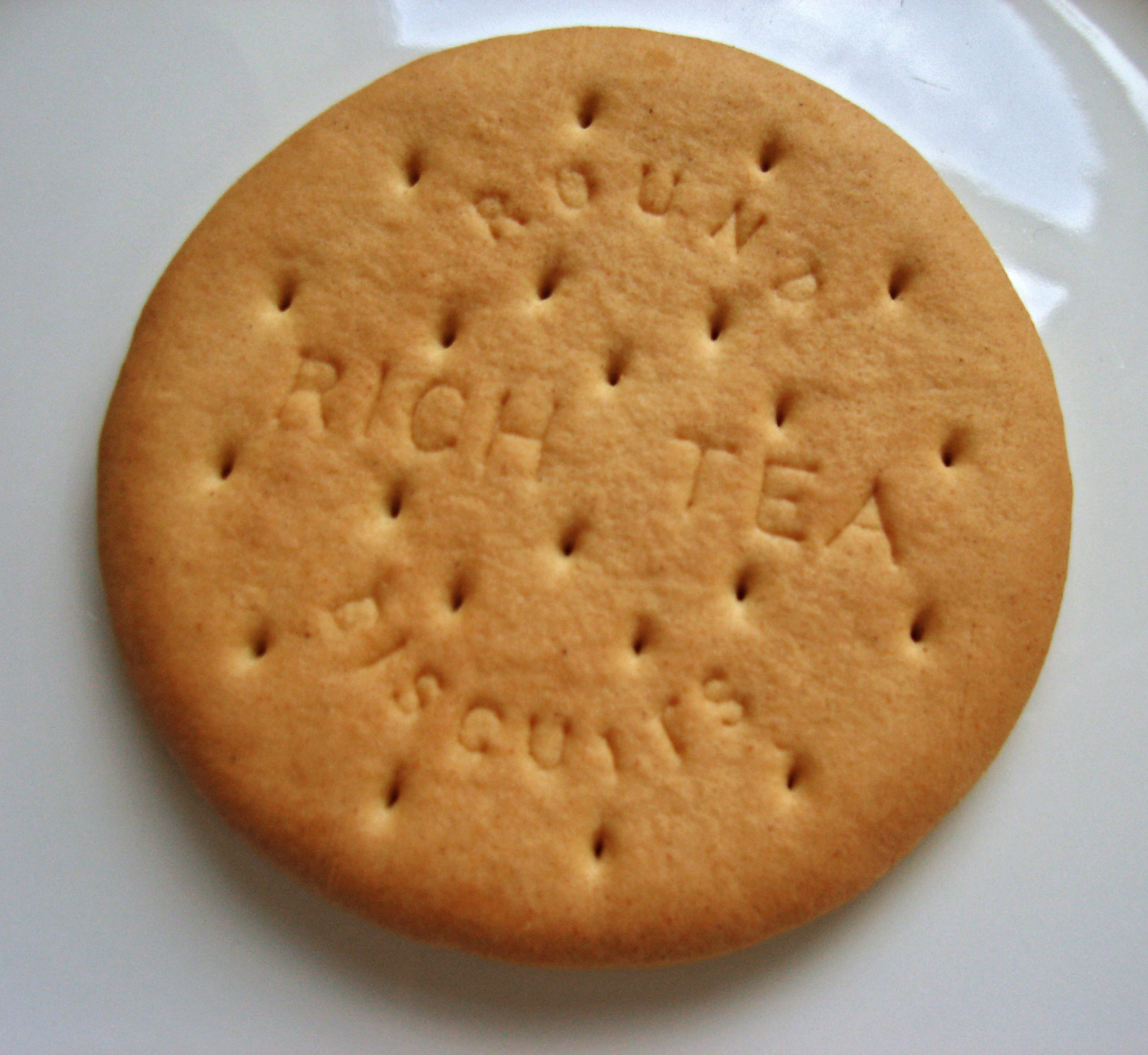
The other day, I offered Simon this biscuit, telling him, "Do you want a Hobnob?"


Not a Hobnob
I will wait a while for my British readers to gasp in horror and feel waves of sympathy for Simon overcome them.
Because that's not a Hobnob.
That's a Rich Tea. And a whole world of expectations had been ruined.

(Is that a cookie to Americans? If so, then what is a biscuit? I got very confused when I was over there. In fact I probably have quite a few "Isabelle Failing at America" posts in me yet.)

For the smart Alecks telling me that it says so on the biscuit, I will add that I was not looking at said biscuit.

But the key here is, why is it important?

Well it is. Crucial even.

To paraphrase a much-loved character, one does not simply eat biscuits. There is a process, there is a hierarchy, there is an art.

The process is simple, one eats biscuits (note the plural here, one does not eat only one biscuit, unless one possesses treasures of self-restraint unheard-of in the British Isles), and one dunks biscuits. In tea. Obviously.

Dunking is the part where the art comes in, because dunking requires timing, dexterity and judgment. If you dip your biscuit too little, then it is barely wet, the flavour of the tea barely comes through and the inside remains too hard. Bad dunking. In fact, no dunking at all, that's dipping.
If you dunk your biscuit for too long, then you drown it, a chunk of it comes off and makes disagreeable lumpy leftovers at the bottom of your cup, ruining the end of your tea, whilst the rest is a soggy mess. If that is the case, you might as well hand in your umbrella and bowler hat, for you will never be British. Many things can be forgiven, but not bad dunking.

It is also very important to be aware of biscuit hierarchy, lest you are taken for a spoilsport hostess.
Biscuits are not created equal, and no matter what your tastes are, their classification is not up for debate (I know, because I really like Malted Milks and hate Jaffa Cakes, but I still have to be aware where they respectively stand in the order of things).

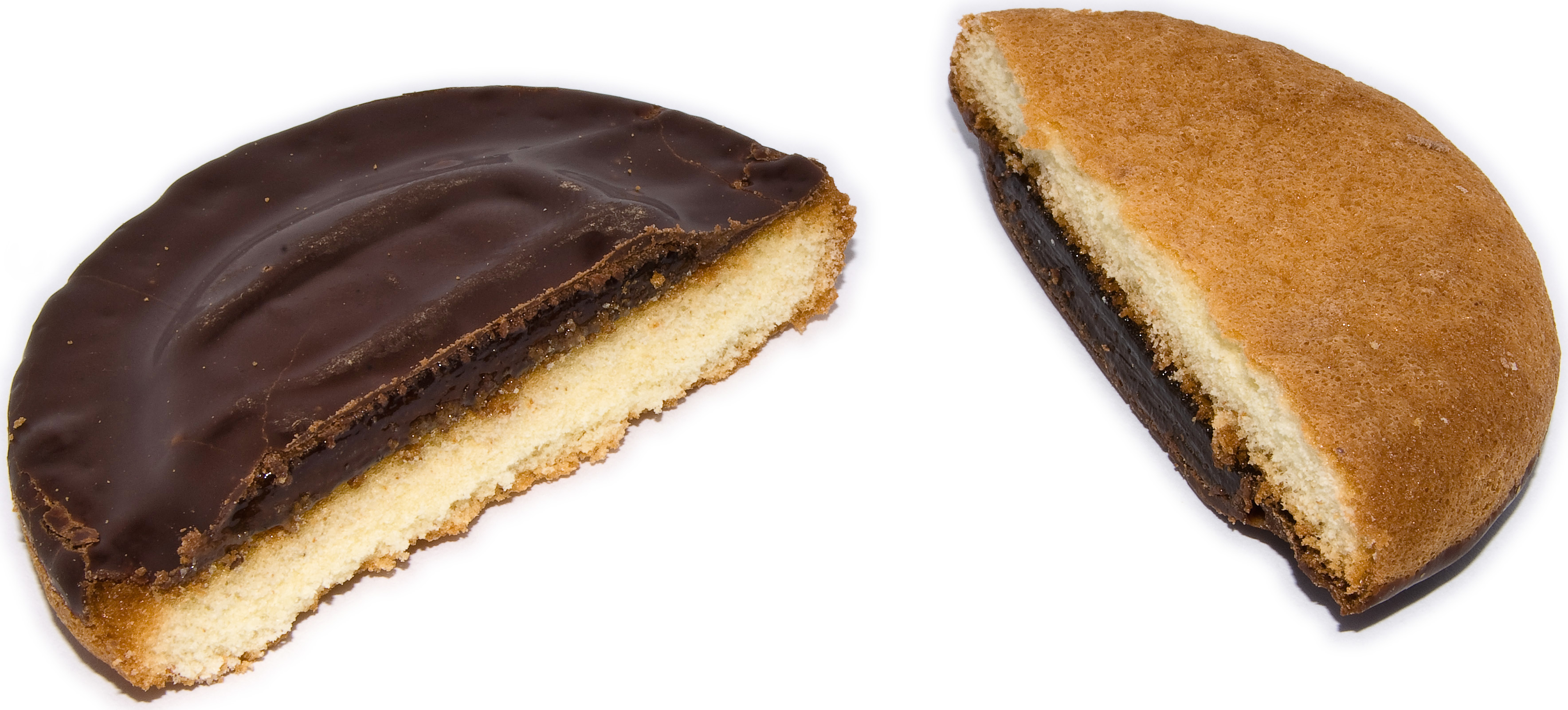
Malted Milk are bottom, Jaffa Cakes are top. (If anyone tries to discuss whether Jaffa Cakes are cakes or biscuits, I will say it once and for all I.DON'T.CARE. They're just horrible.)

So, here is what you must know, from least-liked to most-liked:


They taste perfectly nice, but you have to despise them. By law.

Apparently they are no good either (Why?)

I know, I know. They look exactly like Rich Teas. But for some reason these are not despised.

Chocolate anything is always higher in the ranks, no matter the biscuit. Or whether you like chocolate.


Hobnobs. It is true though, they are lovely.

Nom nom nom.

Shortbreads have a very high currency, but for no discernible reason.

Jaffa Cakes of doom. Blerg.


Here you go. Now you can see why it was such a horribly misleading thing to present a Rich Tea as a Hobnob. And now if you make the same mistake, it won't be my fault.

<a href="http://www.bloglovin.com/blog/13995614/?claim=tvnf5rtsckc">Follow my blog with Bloglovin</a>

Sunday, 10 May 2015

If your child is born, chances are he'll become an axe-murderer

Dear Facebook friend seeking affirmation by sharing posts about how a different parenting method is torture/destructive/producing axe-murderers,YOU ARE NOT BEING HELPFUL. 


By b.gliwa (Own work) [CC BY-SA 2.5 (http://creativecommons.org/licenses/by-sa/2.5)], via Wikimedia Commons


I totally get why you are doing this, parenting is terrifying, and we all wish someone would just come and tell us: "here is the fool-proof way to raise happy, well-balanced children, now get on with it". In the absence of such a panacea, we go for the next best thing, reassuring ourselves that we made the right choice with anything we can find. Especially scientific studies. Those are our favourite.

They are, however, completely unhelpful.

Here's why:

1. Science cannot "prove" a parenting method, and waving numbers in our faces is not going to change that.

Even in the case of the most widely accepted parenting advice (put your baby to sleep on his/her back, to reduce the risks of SIDS). The study showed that the number of deaths decreased when this was done, but along with no co-sleeping, the change of the position of the blankets and no cuddly toys in the cot. Simultaneously, advice on how to feed your baby also changed quite dramatically. How do you know that this bit of advice had more impact than that other one?

You don't.

The NHS noted the correlation and now gives all the advice in bulk to play safe, because SIDS is horrible. But we don't actually KNOW.

Which is why they call it "advice" and not law.

Now for the million of studies that claim "if you do this, this and that, your baby will end up doing this, this and that". How do you think they obtained such numbers?

Invasive behavioural experiments on babies or children, of the kind that could actually test the claims of parenting gurus, are not done anymore. It simply would never go through an ethics committee

Just in case you are not sure, that's a good thing. You do not want to condition a baby to be terrified of his teddy bear to prove a scientific point. The results are simply not worth it.

Even in the case of research that does not harm the child in any way, gathering reliable data is next to impossible. If parents believe there is a potential benefit, then they will absolutely refuse to risk having their child put in the control group, and see him/her potentially deprived of said benefit. And even if they did, you shouldn't let them, because that would be unethical. But if there is no control group, no-one can know what would have happened had you done nothing. So claims just go untested. Seriously. Fish oil is a great example.


Concentrate of cleverness

So, in most cases, the numbers you are using are gathered through collection of data after the fact (i.e: ask all the mothers of axe-murderers if they let their baby cry-it-out) or generalisations from a sample, relying on people's memories, opinions and impressions.

The first method can produce impressive numbers: "98% of axe-murderers were left to cry-it-out! Shock! Shock! Fear!" but gives you very little information as to the chances of YOUR baby becoming an axe-murderer. After all, axe-murderers are not exactly common, and in my experience, have more complex issues than can be explained away by parenting methods.

The second method suffers from all the problems of subjectivity to start with. Do people remember correctly? Do they exaggerate certain events or choices because they already believe that they had an impact? 

No they don't, and yes, they do. They can try their hardest, but they do. It's just the way the brain works.

As if that wasn't enough, the "randomized sample" used to obtain such subjective information is almost never random at all.

If you don't believe me, answer me this: how often do you agree to fill in surveys? Especially if they look long and detailed (which good surveys need to be, to diminish bias)?


Nope.

I used to share a house with a PhD student in psychology, and she was often asked to try her tests on a "sample". This sample invariably was constituted of her housemates, her friends and family, and three unusually kind souls from the street who agreed to answer her questions.
Not that she didn't try, but the realities of life mean that most of your scientific studies are using an extremely narrow research group.


Let's be a sample study!

And last but not least, correlation does not mean causation. The divorce rate going up as the popularity of knitting declined (I am making this up from the top of my head), does not mean that taking up knitting will suddenly secure your marriage. And parenting comes with millions of variables that could all have an impact.

So, parenting methods cannot be proved or backed by science. Some elements can be tentatively put forward, but there are simply too many variables in parenting for science to extricate with certainty what works best.

2. You are dis-empowering women

Parenting used to be something you learnt from your mother and helping raise younger siblings or nieces and nephews. Then, came Truby King (I could go back to Rousseau as well, but he didn't claim to be a scientist). 


You have a lot to answer for.


King did a lot to lower infant mortality through his careful study of the impact of nutrition. But, emboldened by his discoveries, he decided to present mothers with a "scientific" method of raising babies. He wrote a book about it, with all the numbers to back his claims, and millions of women followed his advice, dutifully putting their babies in prams at the back of their gardens when they were crying. Science!
This simple shift had devastating consequences. Because, all of a sudden, science was the solution, not what you had seen your mother do. The solution was in a book, not in your experience and that of mothers before you, transmitted through generations. And mothers were left with no confidence in their own judgement.

And now, you find yourself with thousands of books, millions of options, all battling for your vote by demonising all other methods. Now you have Mommy Wars. Because science.

The thing is, not matter which it is (apart from obviously wacky ones) your children won't be harmed by your chosen method of parenting. The fact that you are reading up, agonising over and trying to follow parenting methods is a pretty good sign that they have a caring mother who is trying her best for her little ones, and that is all that matters for their development. 
You can however, harm mothers.

3. What is your aim?

So you tried this new wonder-method, it worked brilliantly for you and you want to share it with the world. Great. By all means, do share. I don't have any problem with people offering advice on what worked for them, and feeling enthusiastic about their own choices. But if you proceed to explain that every single other method produces twisted psychopaths, you are only weakening your point.

If you have to aggressively shame all the mothers who do not follow the same path as you, you give the impression that your belief in your method is actually so weak that you cannot stand anybody doing anything differently. Your method is so flimsy it requires full approval from the entirety of the world to be sustained.

And if you tell yourself that you shared this article because you want mothers who do things differently to change, newsflash: it is not going to work.

You do not shame and blame someone into following your lead. You inspire them by your confident example, and how you can gracefully take criticism.

All you will have done, by sharing this article, is make another woman feel a little more alone, a little less supported, and the climate in which we are raising our children that little bit more unfriendly. 

Mommy Wars are real. They are the reason why I avoided talking to other mums that were not my immediate family for months after Jude was born. That was very isolating, but as a new mum, unsure of anything, I simply could not face a barrage of criticism because I was doing things in a slightly French way. So I hid. And that was partly YOUR fault, article-sharing Facebook-friend mum.

Friday, 8 May 2015

Les 10 Meilleurs Livres pour Enfants (en français)

Évidemment, le processus a été scientifique et rigoureux. J’ai rassemblé des milliers de données (dans ma tête), des centaines d’avis (de moi), et enfin, la voici, la liste ultime, officielle et indiscutable :

Les 10 meilleurs livres pour enfants, en Français, de la Terre du Monde :


Par contre, les ranger par ordre de préférence, c’était trop dur, donc ils sont par ordre de comme ça me vient. Aussi, certains titres sont en fait des traductions, mais à moins qu'ils ne soient déja dans ma liste anglaise, je les ai laissés en français, parce que c'est comme ça que je les ai lus.

A.   Livres d’images


Petite pause pour chanter Tradéridéra Tralala c’est amusant d’être un ours qui se promène dans la campagne. Et puis aussi Tiens, grande bête de pot ! et puis Michka s’assit dans une des bottes et attendit le matin. Et maintenant petite pause pour se remettre.

Est-ce que vous aussi vous vous disiez que le brigand avec le poivre, il avait quand même l’arme la plus pourrie ? Non, que moi ?

Pomme, Flore, Alexandre et Isabelle. Pour ceux qui avait pas suivi tous les épisodes, je le répète, Babar et Céleste ont aussi une fille qui s’appelle Isabelle. Non mais!

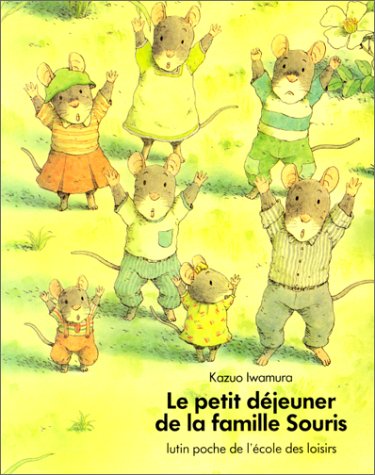
La Famille Souris (Toute la série)
Oui, je sais, c’est de la triche de compter une série comme un seul livre, mais c’est MA liste, vous n’avez qu’à faire la vôtre.


Parce que Benjamin prenait tout dans son petit camion. Et que leur maison était quand même trop mignonne. Et que, quand je serai grande, j'aurai une famille toute pareille.

Comment retarder le coucher en 10 leçons. Est-ce que c’était vraiment une bonne idée de nous lire cette histoire Pounet et Mounette ?

Livre préféré de Banane, spéciale dédicace. Parce que tout ce dont on a besoin dans la vie, c’est Papa, Maman, son doudou, ses biscuits préférés, un grand lit et des meubles qui flottent derrière.

Et oui, grande sœur hors pair, je lisais les 120 noms des enfants au début du livre à Banane. Aussi, pleurer comme une madeleine !

La découvreuse de mondes. Et aussi, elle était si triste qu’elle se changea en larme.

Parce que c’est une vraie question existentielle.

Ernest et Célestine (toute la série)


Parce que moi j’aimais Ernest et Célestine AVANT le film. #hipster <= j’espère que vous avez tous bien lu dans votre tête « dièse-hipster » ? On est d’accord.

B.   Premiers Romans

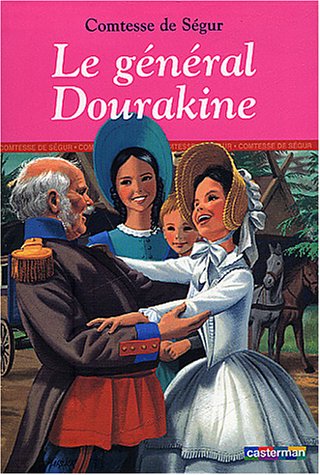
L’Auberge de l’Ange Gardien/ Le Général Dourakine 
(ben quoi ? C’est la suite ! C’est presque le même livre !)


Un Bon Petit Diable


Bon, la couverture est limite glauque, mais bon... C'est l'intérieur qui compte!


Je vous entends râler d’ici, mais je me limite sur les Comtesse de Ségur, parce que, et Les Deux Nigauds ? Et Après la pluie le beau temps ?

La Belle Lisse Poire du Prince de Motordu


Ah, vous voyez! Je ne mets pas QUE du dix-neuvième siècle!

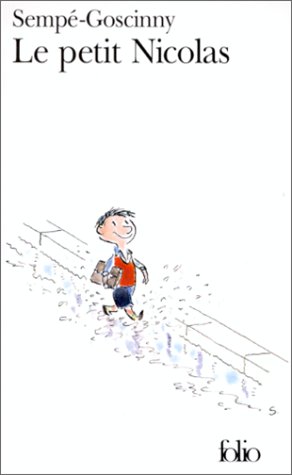
Le Petit Nicolas (toute la série)


Sans Famille


En même temps, on ne se refait pas, j’ai quand même beaucoup de dix-neuvième siècle, mais c’était l’âge d’or (avec garantie vérité universitaire) du livre pour enfant. Pourquoi prendre de l’âge de bronze si on a de l’âge d’or ? 

(je sais, je sais, c’est pas du Français, mais je vous ferais remarquer que j’en suis à 14 dans ma deuxième liste de 10, donc je suis pas à ça près)


Le Tour du Monde en 80 Jours


En version non-abrégée, parce que non, les enfants ne sont pas soudainement devenus stupides, mais si on ne leur donne même pas la possibilité de lire des livres plus difficiles, c’est sûr, aucune chance qu’ils y arrivent !

20 000 Lieues sous les mers


Et là aussi, vous ne vous rendez pas compte, je me suis retenue sur les Jules Verne ! Parce que Mathias Sandorf, Michel Strogoff, Cinq semaines en Ballon  et tout et tout étaient aussi possibles...

Tu as eu peur que je ne le mette pas, hein Pounet ?


Bon, bah ça nous fait donc une liste de dix avec trente-sept livres dedans. Bel effort, Isabelle ! Maintenant dites-moi ce que j’ai oublié !