Saturday, 9 May 2020

How does the Spanish Flu Compare with Covid19?

Recently, I saw a meme on Facebook berating people for not learning the lessons of history - and then proceeding to completely make up facts about the Spanish Flu, using a little graph lifted from the Wikipedia page. 
Feeling rather irate-historian-like that day, I started to point out inaccuracies in the comments. Then I remembered I had a thing I used to use in order to explain my opinions at length without anybody stopping me. So I dusted off the old blog (searched for a while for the lost login details), and here I am.


Before I tell you all about the Spanish flu, and all the fun that was, here are a few axioms for you:

Academic discourse, with its caveats, its quoting of sources and its attention to details is clearer and more accurate (whilst remaining imperfect) than almost any other means of communication we have. There is a reason why it can be verbose and finicky, and that is that its entire purpose is the finding out of truth. It is, however, not very engaging or vivid, for the same reasons.

Memes instead, are very vivid. They are created for impact. Their purpose is not uncovering the truth. Their purpose is to create a strong reaction in the reader (see - "vivid").

This blogpost will hopefully not be as verbose as an academic paper, and therefore lose some accuracy, I apologise for that. Nor will it be as vivid and shareable as a meme. But I shall try to keep it short.

So, enjoy my attempt at a half-way house!

1. The Spanish Flu: an almost meme-like summary

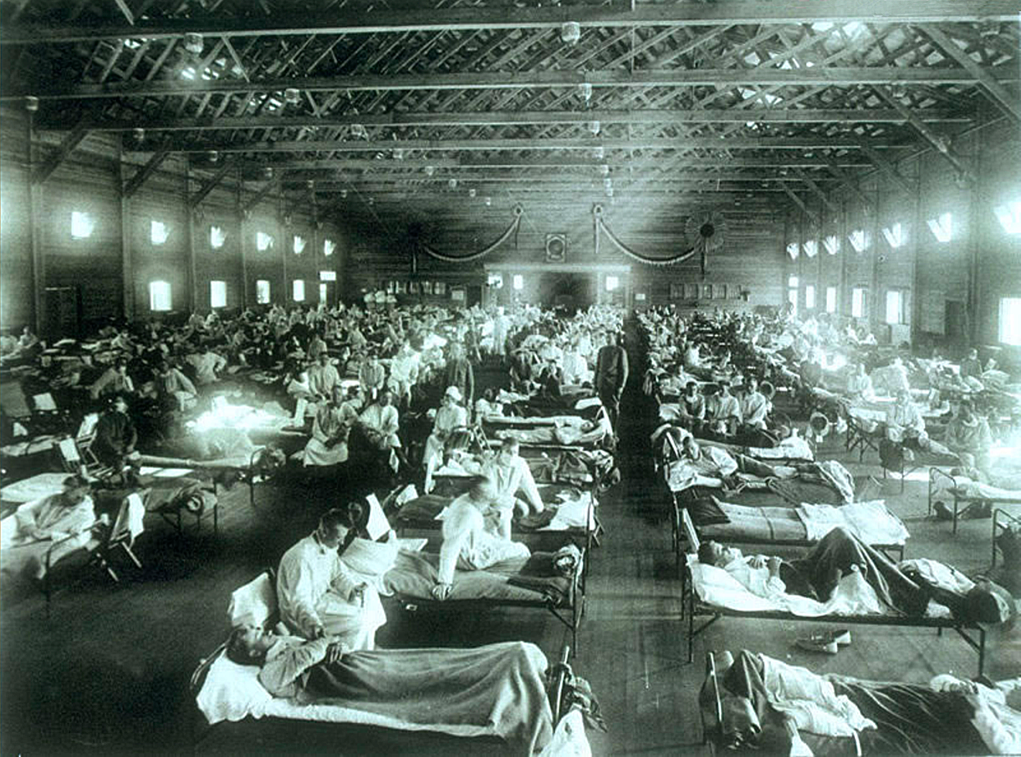
The Spanish flu was a strain of the flu of particular virulence which originated either on the front line in Europe (the WWI type, not the dancing NHS nurse type of front line), or in barracks in America. Either way, it thrived on war, because what could be better than getting lots of potential hosts together in barracks, so they can all be easily infected? Apart from, maybe, doing that then putting them in larger overcrowded spaces for weeks (ie, in boats bound for Europe) and then set them loose among other young men living in overcrowded spaces, who will also get on boats and go home at various points.
I mean, if a virus could day-dream about the perfect situation for world-domination, this would be it.
The pandemic killed at least 17 million people (almost certainly more) over 2 years, and the people who died in greatest numbers were in the 25 to 45 age range. So the ones who had already been dying in great number for four years. 

Quick facts check:

1. This was not the first time the flu had hit - it was a familiar disease. In fact, there were plenty of disbelieving headlines calling it "just influenza".

2. There were quarantines, but they were city-wide, not state-wide. The stopping of an entire country thing we're experiencing right now is completely new (as far as I can tell).

3. There was next to no economical impact, because the world had been at war for four years, food was already rationed, freedoms already curtailed and the world economies had already been overhauled to feed the war machine.

4. Quarantines worked well and were strictly followed because people were actually scared for their own lives. It's much easier to keep people at home when they believe they could actually die within a week, not matter how young and robust they are. It's harder to force them to do so for an ill-defined "greater good", especially if you fail to give any idea of how long they must do so.

5. The deadliest wave was indeed the second one, however, cities hit badly by the first wave had developed an immunity, and people did fare much better there.

6. The whole "people danced and hugged at the end of quarantine" thing, if true at all, is based on no data I could find. I personally find it very hard to believe (see, "scared" above, and "no country-wide lockdowns"), and would have been a good idea (see, "getting hit by the first wave" above). I mean, there was plenty of documented dancing in the streets to celebrate the end of the war, but that was later and, come on, give people a break! 

7. During the deadly second wave, something happened to the already virulent virus which made it shift from its usual victims (the frail and the elderly) to a form which was particularly catastrophic to people with healthy immune systems. The exact opposite of Covid19.

8. The Flu virus is not a Coronavirus. Comparing the H1N1's behaviour in 1918 to the new coronavirus in 2020 is academically fun, but in terms of predicting the behaviour of the second, it's about as useful as basing your expectations of how a leopard will react on your knowledge of elephants. 

9. I'm just going to repeat that last point. The coronavirus is not a flu virus.

10. It's not the same virus.

2: Actually Relevant Things to Consider about the Spanish Flu in Light of Covid19:

1. Did you know where the Spanish flu got its name? Not because Spain was hit first or hardest, but as it was one of the few countries in the world not at war, they reported the severity of the outbreak with relative accuracy. Unlike the rest of the world, who preferred patriotism and focus on the war effort to transparency. Many countries stumbled almost blindly into the pandemic because governments wouldn't collect or reveal the actual death rates. 

2. Scientists were ignored a lot. Governments argued that if they quarantined their troops and stopped the war effort, the other side would take advantage. And you could see their point, they were already sending these young men out to die anyway. Callous but logical.

3. Scientists didn't know very much. They could advise on quarantining measures, and they tried very hard to work on cures, but medical science as we know it was roughly a generation old, so not that entrenched. Even if governments had been more inclined to listen to scientists, it would have been crucial to choose the correct ones to listen to. For example, almost all the most preeminent scientists of the time thought influenza was caused by a bacteria, not a virus.

4. The reason I know who they should have listened to is not because I am a genius or the person who should have led the world in 1918 . It's because I was born long enough after the facts. And that's how pandemics work. 

5. It is a tough time for politicians who have to make decisions of enormous import with only probabilities to rely on. However, it is their job, and no-one has forced them to take it on, so there is no excuse for obfuscating, stringing people along, and generally treating us like unreliable teenagers.


In the spirit of not being an academic paper, this piece is not extensively cross-referenced. In the spirit of not being a meme, I will not sign it "Mahatma Gandhi" or "Native American Proverb" - but I will instead give you my main source, which is a very interesting read:


The Great Influenza cover art
Link

Saturday, 19 January 2019

What I Read, 2018 edition, Part 1

Soooo, progress! 

This year was the second year I tracked my reading, and last year felt lacklustre, but turns out wanting to beat a number is really nice,because it gives me just the extra push to get to my book instead of mindlessly scrolling for an hour after babies are in bed and chores are done. Anyhow. I recommend having a running tally and a goal, even if it feels somewhat forced, they really work.

Jude wrote a book this year. 


My running tally is on my phone, I just write title/date started/date finished and then aim to write a few notes in my reading journal, but I don't always get to that last part.

In terms of goal, I was aiming for 52 aaaaaaaaand.....

*drum roll*

*more drum roll*

I finished 56! 

I also abandoned 4 and started 2019 with (only!) 7 books on the go. Another thing that changed is that I used the library a lot more, which is nice for my wallet, and another good motivator to get the book read.

But without further ado, here are the first 16 from 2018.

1. The Bible - by God (01/01/18 - 31/12/18) my own book

This was a challenge Simon and I set ourselves, reading through the whole Bible in a year, and we did it! It was a great experience, and I will talk about it some more in another post, but if anyone fancies giving it a shot, we used this reading plan by Meg at Held By His Pierced Hands, and it worked really well.

2. The Listening Life - Adam McHugh (05/01/18 - 13/01/18) audiobook

An interesting read, very motivational and practical on the why and how to listen better. I particularly liked the tip about naming intrusive voices playing in your brain whilst you try to listen to someone ("Hello there, Envy!"). 
One thing that amused me was that although the author is Presbyterian, he is slightly in denial about the fact the 99% of his sources are Catholic.

3. Danubia - Simon Winder (21/11/17 - 20/01/18) my own book

My, that was fun. Nothing better than learning lots about history you don't know much about, apart from reading lots about history you don't know much about in a book that is very well written and quite funny. In terms of style, it reads like if Bill Bryson was more history focused and loved art and music.
Go Habsburgs! Although I disagree with Winder about Karl. I like Karl.
Also, now I need to find a good book about the history of Poland.

4. Reasons to Believe - Scott Hahn (21/01/18 - 30/01/18) audiobook

As always with Scott Hahn, a great read, the premise of this one being trying to help us justify "the hope that is in you", starting from belief in God to Christ, to the Catholic Church. I liked his point about how being a theist was always considered more reasonable than not, until our age got weird and bad at reasoning.

5. Gargantua - Francois Rabelais (December 2017 - 02/02/18) my own book, unfortunately

I chose this one as part of my "reading the classics" endeavour, because the next one on the list was Pride and Prejudice, which I have read approximately 5638754 times, so I thought I'd throw in a French classic instead. Bad move.
Not funny (gross doesn't make me laugh, it just bores me) and pretty weak in terms of being a manifesto for humanist ideas, especially in light of what I was reading abut the Byzantine empire. All his pitting of the Ancient world against the Middle Ages seemed like the reaction of a dedicated follower of fashion to a new fad - the whole of his argument being that new (or old-new, in the case of the humanists) is necessarily better. Like the Enlightenment, Humanism is turning out to be, upon closer inspection, rather a self-glorifying movement than a useful critique of its time.

6. The Dry - Jane Harper (01/02/18 - 03/02/18) audiobook

A great page-turner. I took a little while getting used to the Australian accent (audiobook problems), but the author manages to make the book both page-turny (it's a word) and atmospheric. And also, something I love in murder mysteries, it did keep me guessing until the reveal!

7. Emil and the Detectives - Erich Kästner (08/02/18-11/02/18) library book

Officially, I was reading this so as to know whether I can hand this to my children when they grow up. Unofficially, I just loved it for its own sake. I could feel myself slipping back into the young reader I once was, and it was glorious.

8. The Happiness Project - Gretchen Rubin (08/02/18 - 11/02/18) Library book

Like all the other Rubins. A fun read, lots of fun facts, but very much felt like nothing new was added to her other works I read in terms of applicable insights. And she still uses the word "healthful".

9. How To talk so Kids will Listen, and Listen so Kids will Talk - Adele Faber and Elaine Mazlich (15/03/18- 20/03/18) My own book (thanks Pascal and Armelle)

The beginning of a rabbit hole of parenting books. More on that soon.

10. Picnic at Hanging Rock - Joan Lindsay (25/03/18 - 26/03/18) audiobook

I was having an Australian mystery phase, apparently. A very short but really well written book, blurring the lines between reality and fiction beautifully, but in a way that leaves you fascinated, rather than annoyed and manipulated. I hate to use the word "atmospheric" again, partly because it is not at all something I am drawn to normally, but there it was. And it was good.

11. Signs of Life - Scott Hahn (26/03/18 - 03/04/18) audiobook

Another solid Scott Hahn. He goes through and defends 40 different Catholic devotions. Very inspiring if you want to take up a new one, or simply be a little more mindful when you do the sign of the cross.

12. The Zero Waste Home - Bea Johnson (22/03/18 - 10/04/18) library book (she would be proud)

Lots and lots of ideas to reduce waste, plenty of them very feasible, and I have implemented a few. The book itself is well-organised and practical, but the author considers reducing waste her family's first priority, and I am just not on board with that. There was also a bit on the number of babies you should have which was plain immoral - apparently the zero waste community is hoping to eradicate themselves from the earth, and that doesn't gel with my understanding of human beings made in the image and likeness of God. Still, it's a hard book to top if you want practical ways to be a more mindful steward of resources.

13. Mindless Eating - Brian Wansink (09/04/18 - 12/04/18) audiobook

An interesting read and refreshingly non-accusatory. It is not demonising the food industry or a food group (or the people who eat it). It's not having a huge impact on my habits, but I can see how it could help someone else. And it IS very interesting.

14. Braving the Wilderness - Brené Brown (12/04/18 - 16/04/18) audiobook

Completely fascinating and very thought-provoking. I felt encouraged to listen to other people's stories, especially when I disagree with them - including her. Her imagery of dancing in the wilderness and of the tribe of misfits fell completely flat for me, I'm afraid, but it doesn't cancel the very great qualities of the book in terms of encouraging dialogue.

15. A Damsel in Distress - P. G Wodehouse (17/04/18 - 20/04/18) audiobook

I expected it to be funny, and yet I did not expect how completely delightful and hilarious it would turn out to be. Eat your heart out, Oscar Wilde. THIS is true comedy, but the author is clearly fond of his characters instead of sneering at them or pontificating. 

16. The Vanderbeekers of 141th Street - Karina Yan Glaser (20/04/18 - 22/04/18) audiobook

Another, erm, research project, you know, for my children. This is an excellent example of modern children literature done very well. Plus it involved a large family, a plot that was sweet without getting naff and if the parents were a touch too perfect, well, I didn't mind.


That's it for now. Tune in again for 

Part 2
Part 3


Sunday, 9 December 2018

Being Martha


I have struggled with this post for quite a long time. I keep trying to write it, and then I worry it will just sound like stealth bragging, conceit, or whining. But the urge to write it is not going away, so I will attempt to push through with it.

***


When I was a child, I was always incensed by the “unjust” parables. The 99 sheep versus the lost one, the prodigal son, and Martha and Mary (not a parable, I know, but go with me here). Especially Martha and Mary.

I think to some extent, every one struggles with how counter-intuitive these parables are, but over the years, I have come to realise that I am the lost sheep and the prodigal son, and thank God that God is not fair. But I am also Martha. Definitely Martha.

Martha resonates I think because whilst the others are actual parables, and therefore feel exaggerated, or at least exemplary, Martha is, Martha was, and Martha feels real. We have all been there. Demanding justice, asking for fairness, and “why can’t she help?”

And the thing is, Jesus doesn’t tell Martha to sit down. He says that Mary shall not be made to stand up. It is unfair.

I was prepared for many struggles when I became a mum, I read the blogs and the manifestos and the “you won’t sleep” and “your house will be a disaster” and the “you won’t be able to take a shower for days” and I was fully ready to give myself a break. What I didn’t expect was to be the sorted one. Being organised and having a clean house, that took me by surprise.

So I am Martha. And the thing they don’t tell you about Martha is the internal monologue which leads to “why can’t she help?”. The Evil One whispering in her ear “No-one has your back. You can’t let go of a single thing, because no-one has your back. The others are struggling more. And no matter how nice they are, they kind of resent you for being the sorted one. So no-one will have your back. You are all alone.”

That’s why, in my head, I'm often catching myself thinking: “why can’t she help? Why can’t I be the helped one for once?”

On better days, I know why she can't. Because Mary does struggle more, that is why she is at the feet of Christ. According to tradition, Mary had sinned heavily before she found herself clinging to Christ. There is a desperation in her clinging, like the mother of a sick child, grasping and gasping for air in the struggle. 
That’s not to say I think Martha is not clinging to Christ. She seems to need him in a different way. Martha is sorted, she knows what to do and she does it. Just like that. But she also believes. She goes and tells Him off for being late, because she knows had He been on time, Lazarus would have lived – her faith is strong, she just hasn’t quite let go of the world like her sister has. She is the practical one, the sorted one. And I can see the excesses in her tendency, I really, really can. Being worldly. Pride. I can see why Christ rebukes her.

But all the same, I kind of want to say “I hear you, sister. I’ll have your back”.

Will you have mine?

Monday, 16 July 2018

The Ten Best Baby Books We Own (in English)

I recently finished a very good book (this one), which helped me re-focus on the joy of reading aloud with the children, even when they are too young for stories, but can delight in the rhythms and cadences of words. Sarah Mackenzie points out that the most important thing is to help your child feel connected to you, and bonding through books is the best!

The only hiccough with very small children is that many books aimed for them are counting/colour/animal primers, and unless the illustrations are REALLY captivating, you will soon want to pull your eyes and ears out. But children also want to read them over and over again. Which is a problem.

So, ideally, what we need are books that can withstand 34909285687 readings in a row, and that's a pretty tall order. No adult book is ever submitted to that kind of scrutiny! But that is not even all! The other things you need are books that are short enough to keep the one year-old interested, with beautiful enough images to keep the 2 and 4 year-olds looking, and language that gives enough pleasure to the adult reader that s/he won't mind going straight back to the beginning at the end.

So, without further ado, I present to you, the ten books in our house which come closest to accomplishing this feat (in the order they appear on my shelves, so pretty random!):

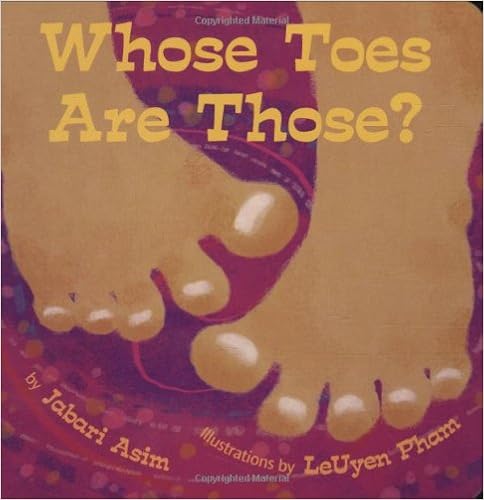
1 - Whose Toes Are Those? - Jabari Asim


This is a very sweet book, completely delightful, and the images are gorgeous. It's in pretty constant demand in our house, and I don't mind one bit!

NB: It's an American book, so at one point, it talks about going "all the way to England", which is obviously not that impressive for us, but no-one batted an eyelid.

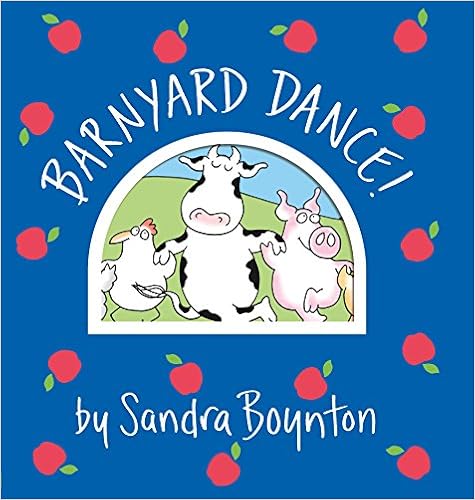
2 - Barnyard Dance - Sandra Boynton


I wouldn't say the illustrations are the most beautiful I have ever seen, but this book is pure fun, and I dare you to pretend like you don't want to join in the dance just a teensy bit!

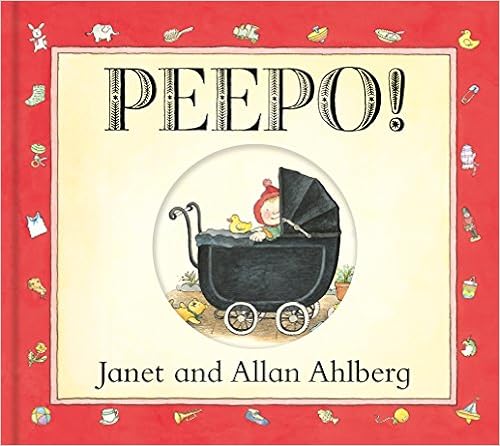
3 - Peepo - Janet and Allan Ahlberg


The Ahlbergs are fabulous at creating books that you just want to look at that little bit longer, because of all the sweet details in every image. This one actually encourages you to do just that, and it's a pretty good antidote to the 327594382 re-readings which WILL happen.

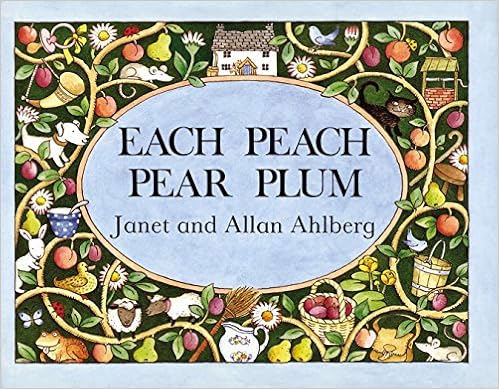
4 - Each Peach Pear Plum - Janet and Allan Ahlberg


Another Ahlberg masterpiece. Even the very small children with no knowledge of the fairy tales they refer to, love looking for the hidden characters, and it keeps the book delightful for the older ones when they suddenly "get" the references.

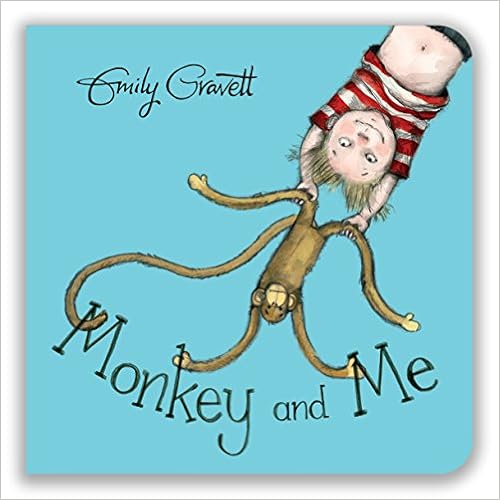
5 - Monkey And Me - Emily Gravett


I love Emily Gravett. She has the ability to tell stories in very few words, the drawings are absolutely delightful but also sparse. I don't know how she does it! 

NB: As you can see from the title, the book is not perfectly grammatically correct - she's reproducing the language pattern of a child - but if that is enough to keep you from it, then it's your loss!

6 - Where's Bear - Emily Gravett

Stock photo

This was Jude's number one absolute favourite for the longest time. This is another example of Emily Gravett's genius, with even simpler language.
Her books are some of the ones I always seek out, because I know she will not disappoint. I would have added Matilda's Cat to this top 10, except we don't actually own it, we just borrow it from the library. A lot.

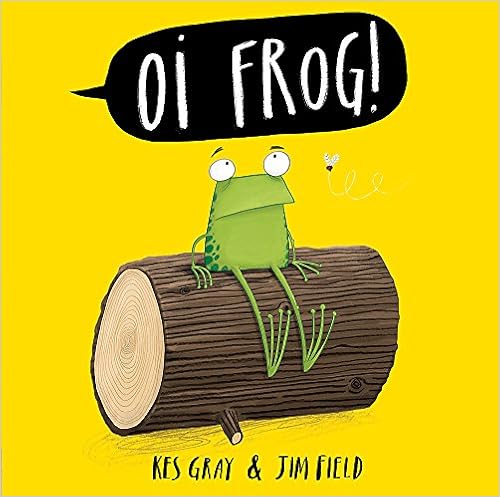
7 - Oi Frog - Kes Gray


Hilarious, lots of fun details, the kids will be reciting it along in no time. Plus, it draws attention to the mechanics of rhyming. What's not to love!
Actually, one thing: the author has since written 2 or 3 more on exactly the same pattern, and that is a bit annoying. But just get the original one and ignore the rest!

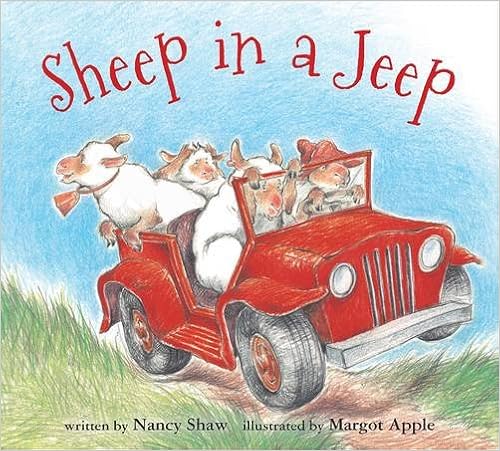
8 - Sheep in a Jeep - Nancy Shaw


I see a bit of a pattern here, because this is another example of a book with very simple language used beautifully and paired with lovely illustrations with lots of details that keep you looking. Also, I still chuckle a bit at the end, and that is no mean feat, because I have read this book A LOT.

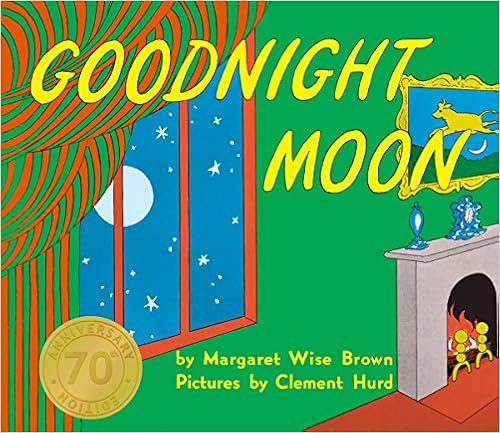
9 - Goodnight Moon - Margaret Wise Brown


Of course. All children are completely and universally mesmerised by this book. And it IS lovely to read. But really, you need to read this analysis of it by Raquel D'Apice on The Ugly Volvo, and this book will become the official funniest thing you own. Trust me and go read her piece.


This one is beautiful and will delight your children so much you won't mind re-reading again. 

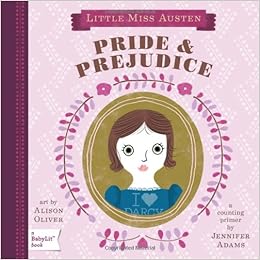
Bonus - Little Miss Austen: Pride And Prejudice - Jennifer Adams


My children aren't actually that interested in this one but I am, so I don't care, and I'll keep reading it. And that's saying a lot for a counting primer.


Here you go. Now you can go read to your babies.

Coming soon:


Best picture books we own (in English)

Best picture books we own (in French)

Mais où sont passés les (bons) livres pour bébé ?

J’ai récemment cherché à compléter notre collection de livres pour tout petits (pour l’anniversaire de Mathilde – le reste de la famille en a assez que je ne leur donne que des idées de livres pour les anniversaires de mes enfants, du coup je suis obligée de les acheter moi-même, ma vie est clairement un enfer). 


Plein de livres!

J’ai trouvé plein de choses fantastiques (voir ici pour les meilleurs livres pour tout petits), mais j’ai bien dû me rendre à l’évidence, en français, il n’y avait rien de rien.


Alors, c’est sûr, je suis un peu difficile. Je cherche des livres très simples, avec des illustrations captivantes (jolies c’est mieux, mais intéressantes suffit), je ne veux pas juste une liste de mots sans dialogue, ni une histoire complexe. Juste des phrases qui font plaisir à lire (poétiques, super, mais rigolotes c’est très bien aussi), des répétitions ou des rimes pour aider le tout petit à remarquer les mots et puis quelque chose d’intéressant, pour que je survive aux huit mille inévitables relectures.

Les anglophones font ça très bien. Les francophones, franchement moins. 

C’est une vraie perte je trouve, parce que moi j’adore la façon dont les Anglais utilisent les nonsense poems, tous ces textes qui ont pour but de faire rire et/ou simplement d’encourager la dégustation des mots (la longue tradition des Lewis Caroll, Hilaire Belloc ou Spike Milligan) et à mon avis ça commence là, dans les jolis livres pour tout petits. Qui sont bien plus une préparation pour une vie passée à apprécier les livres que les livres qu’on voit partout, à tirettes, roulettes ou petites-puces-qui-font-de-la-musique. Parce que souvent le but de ces livres gadgets (qui ont plein d’avantages, hein, on est d’accord !) c’est de laisser l’enfant tout seul avec le livre. Des livres-jouets donc.

Où sont les livres qu’on lit avec son petit, pour partager ensemble le plaisir des mots ?

Dans toute ma collection (et j’ai une grande collection – j’ai un petit problème avec les livres pour enfants) j’ai réussi à en trouver trois qui correspondent à mes exigences. Et qui ne sont pas du tout au niveau de mes préférés en anglais. Ça fait pas beaucoup. Donc allez ! Auteurs ! Un petit effort !

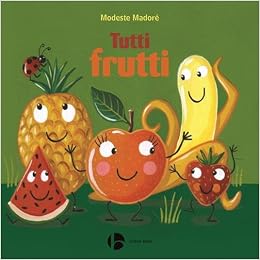
Tutti Frutti – Modeste Madoré


Mes parents ont ramené ce livre de la Réunion et ça a été le premier livre auquel Jude a accroché. Une façon très mignonne d’introduire en même temps les noms des fruits et des expressions idiomatiques, avec en plus de jolies images pleines de détails.

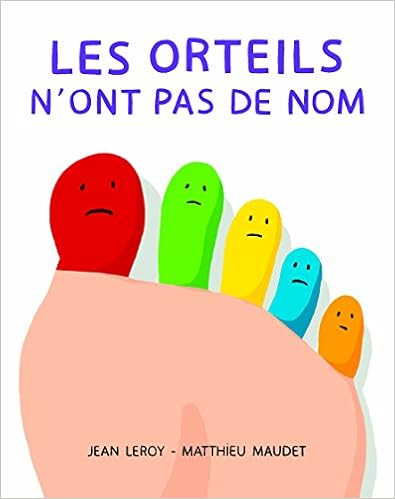
Les Orteils n’ont pas de Nom - Jean Leroy


Un autre gros succès, jouant sur la répétition et un façon plus intéressante d’introduire du vocabulaire qu’un énième livre-liste.

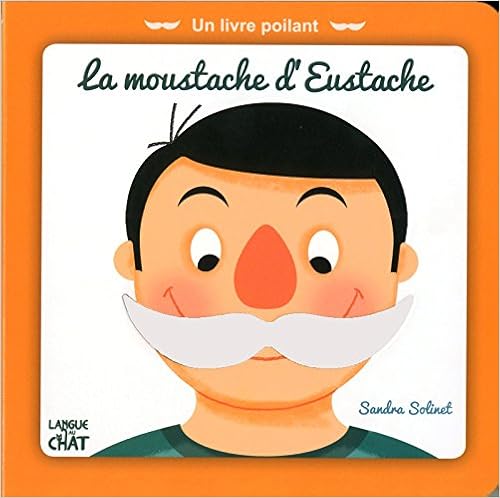
La Moustache d’Eustache- Sandra Solinet


Simple et joli. L’idée est très sympa, même si encore une fois, on est très loin du niveau des anglais.

Mention Spéciale 1 : Limite bébé/ plus grand

Deux TRES jolis livres en ce qui concerne les illustrations, mais qui sont des traductions du japonais, donc la langue n’y est pas franchement remarquable, ce qui pousse leur intérêt vers les plus grands, puisque l’histoire prend le devant sur les mots.

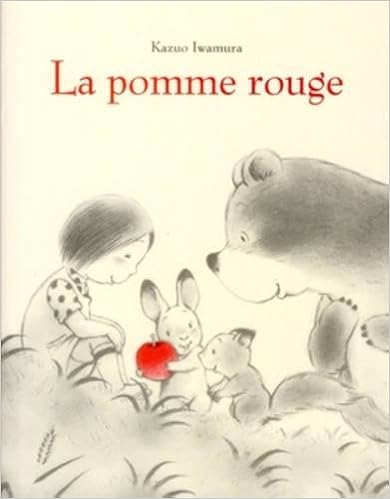
La Pomme Rouge – Kazuo Iwamura


Légèrement plus simple que ses autres classiques (la série « La famille souris » est et reste un énorme succès chez nous) avec des dessins magnifiques, mais je ne l’ai pas vu en cartonné, ce qui rend la lecture avec les tout-petits plus difficile et ils ont moins accroché.

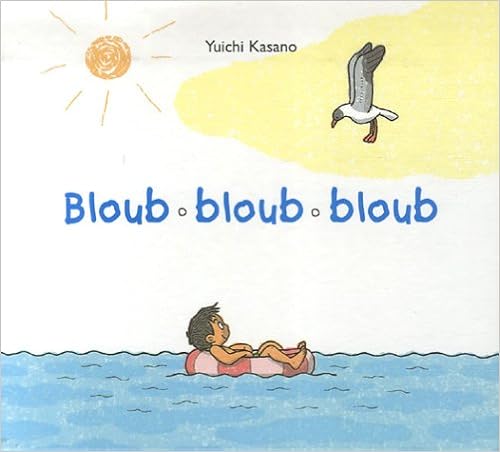
Bloub-Bloub-Bloub –Yuichi Kasano


Un livre mignon et rigolo, mais la traduction (ou l’original ?) rend le langage un peu maladroit et inutilement compliqué. Et encore une fois, je ne l’ai vu qu’en tout petit format, clairement conçu avec des apprentis-lecteurs en tête plutôt que de très jeunes enfants

Mention Spéciale 2 :

Deux livres avec des concepts rigolos, mais avec un petit bémol

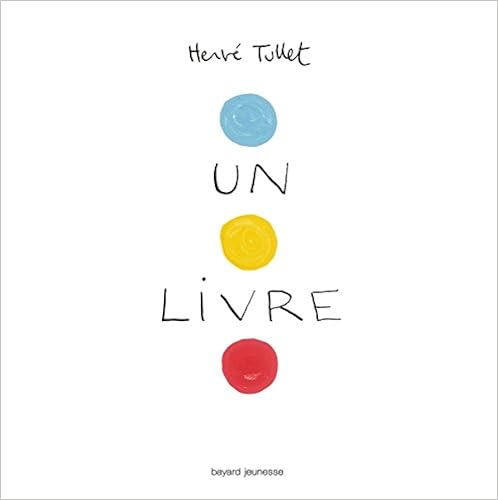
Un Livre – Hervé Tullet


Mes garçons aiment beaucoup, mais le concept est ici largement plus important qu’une histoire, que les images ou que les mots. Limite livre-jouet donc.
Hervé Tullet a en plus l’air d’avoir décliné l’idée en 48 versions, ce qui m’agace toujours un peu.

Mes Petits Bobos - Mathilde Cabanas


Un concept mignon, mais les dessins n’ont pas grand intérêt, et encore une fois, c’est un livre tout petit, donc pas idéal.

NB : Je ne parle ici que de livres pour tout petits, les 0-2/3 ans, j’ai (et j’adore !) plein de livres en français pour les plus grands.

NBB : J’ai le même avec les poèmes pour enfants. Tout ce que j’ai trouvé en français était niais alors que j’ai un livre entier de petites perles en anglais. Du coup pour les poèmes à apprendre pour Morning Time, on est passé directement aux classiques.

NBBB : On refuse de lire en français des choses qui ont été écrites en anglais à l’origine, ce qui nous limite aussi, bien évidemment.

NBBBB: (cet étrange systeme que je viens d'inventer pour ajouter des notes en fin de page n'a aucun sens) si vous avez des livres a me conseiller qui remplissent mon énorme cahier des charges, n'hésitez SURTOUT PAS!!! Sharing is caring.

Monday, 9 July 2018

The State of the Homeschool - or What worked with Jude this year

Exceptionnellement, il existe une version en francais de ce billet, ici.

As I mentioned previously, a little bit by accident, a little bit out of eagerness and curiosity, this year turned out to be our first homeschool year. 

Theoretically I was all for holding off for a little while yet, but when around Christmas Jude started to work out how to read on his own, we ended up injecting a lot more formal education into his life. I think a lot of it has to do with his personality, he LOVES workbooks, and he is very willing to learn things by heart. I was also quite keen to see how I could manage our schedule so as to get everything done (babies, housework and teaching), so I decided to experiment with two "homeschool slots" in our routine which I was planning on keeping pretty low-key and spontaneous. And then I realised that *I* am neither of these things, and so we started things in earnest. 

It took a fair amount of fine-tuning, we definitely hit a point where I was just asking too much of both Jude and I, and it started to take the joy out. Which is why a couple of months ago I replaced the morning "homeschool slot" with "Morning Time" (light some candles, read the Bible, pray, say the poems we have learned so far, practise the one we are learning, read some favourite ones, then read as many books as we have time for) which involves Gabriel better, and definitely feels a lot more fun.


Typical activities during morning time


Literacy:

We started the year intending to mostly do fine-motor exercises, (following this method), play with quantities (we used this a fair amount), learn a few poems and do basic workbooks (did I mention Jude loves workbooks?) - this, and this for example.

After a while Jude could simply fly through all of this and not much was gained by continual repetition, so we upped the ante. My cousin (hi Meige!) suggested this method for learning to read and even sent us the book, because she is awesome. I tried to pace Jude a bit, but we are nearing the end of the book, so I got a bunch of early readers which we are practising on (here and here are some good examples).

In terms of teaching him how to write, I am entirely focused on the mechanics of writing (fine motor skills and spatial understanding on the page), we have finished this and have just started this one, so far so good.

Jude loves to write his own words however (he often uses the French phonemes - he is only learning to read in French so far - to form English words, which is quite fascinating) but I have very little to do with that, beyond deciphering them when he shows his work to me, and praising his efforts.


You get points if you work out what he was trying to write


Numeracy:

Simultaneously we decided to go with the Singapore method for maths, and got this book and workbook, but although doing the operations was pretty easy for Jude, the language element - which is pretty essential with Singapore - was way over his head, so we dropped it, and got a different workbook (this one, which Jude LOVED and was begging to do "one more exercise" all the time). We finished it pretty swiftly and just started this one, which looks promising. 
Simon likes to do extra maths exercises with Jude, but that is a very ad hoc business, as his crazy schedule rarely allows for it.

Other Stuff:

We would like to introduce a bit more music, but Simon is the musician in the family, and we haven't yet worked out how to make it a regular thing.


Matmi is pretty keen though


We have also been learning some poems, as there is no such thing as too early to have beautiful language in your head, and the boys absolutely love reciting them standing on the table - or singing them. We take them one at a time, alternate one in French and one in English, and just go very slowly (as in, we've only just started our fourth this year). We've learnt:

The Friendly Cow - R.L Stevenson
La Grenouille Qui Voulait Se Faire Aussi Grosse que le Boeuf - J. de la Fontaine
I Wandered Lonely As a Cloud - W. Wordsworth

and we have started the last tirade from Act 5, scene 6 of Cyrano de Bergerac - E. Rostand.

We also have this fabulous book, from which I take requests during morning time (if someone fancies doing something similar for French poems, please! I could use one!).

Finally, as part of our rosary group, the children do weekly (more or less!) liturgical year activities, and you know, lead a normal life, drawing, cutting, pasting, riding bikes, running around, painting themselves with mud and taking long walks in the woods!


And how to help out around the house, obviously


Overall, I am glad we went for it, I am glad we started figuring things out, and Jude seems none the worse for it. I don't know whether we will start Gabriel on a similar course *quite* that early nonetheless. It does occasionally feel a bit unnecessary and we don't know yet how eager Gabriel will be to do formal learning. At the moment he is pretty keen to get involved but we shall see how things evolve.


Bilan de la Première Année IEF

For the version in English, click here.

Un peu par accident et un peu par enthousiasme, cette année s’est trouvée être notre première année d’école à la maison (ou IEF, comme disent les Français du milieu). 

A l’origine j’avais seulement l’intention d‘expérimenter avec des activités très simples, plus pour me rendre compte des difficultés d’enseigner tout en s’occupant des enfants et de la maison que parce que je pensais qu’il y avait un réel besoin. Mais vers Noël, Jude commençait à apprendre à déchiffrer tout seul, donc on a décidé de sauter le pas vers du plus formel. On a aussi remarqué que de lui faire utiliser ses petites cellules grises un peu plus intensément avait un effet merveilleux sur son comportement.

Comme vous le remarquerez dans les détails qui suivent (et comme je l’ai déjà mentionné ailleurs), Jude ADORE les cahiers d’activités, mais il a plus de mal avec les activités purement créatives – il a un côté très perfectionniste, donc il résiste souvent aux tâches « ouvertes ». Mon plan de départ incluait une espèce de vision chimérique de créations spontanées, suivant nos inspirations du moment (probablement avec des fleurs partout, des oiseaux qui chantent, et une maman qui n’émet rien d’autre qu’un rire cristallin quand son rejeton chéri met de la peinture partout en plein élan créatif). Comme il se trouve que la maman au rire cristallin, en fait, ce n’est pas moi, bizarrement, ça ne s’est pas passé comme ça. Après pas mal d’essais, on a fini par trouver un système qui fonctionne assez bien. On a donc deux « Temps » IEF dans la journée, Morning Time, plus informel, et LEALM (L’Ecole A La Maison) l’après-midi pour faire les choses un peu plus difficiles.


Ma vue depuis le canapé quand on fait Morning Time


Pour Morning Time, Gabriel participe, on allume des bougies (TRES important pour les garçons, les bougies) on lit la Bible et on prie. Ensuite on récite les poèmes qu’on a appris, on avance un (tout petit) peu sur celui qu’on est en train d’apprendre, puis on lit ceux qui nous amusent dans ce livre fabuleux (si quelqu’un a envie de créer un équivalent français, je suis preneuse). Enfin on lit autant de livres que possible. Parfois Jude nous lit un petit texte lui aussi, mais en général je ne force pas trop.

L’après-midi c’est juste Jude (Gabriel est soit en train de faire la sieste, soit de profiter du libre accès au petit train).

Au début de l’année, je ne pensais faire que de la préparation à l’écriture (méthode Dumont, ici, et ici), travailler un peu sur la compréhension des quantités (avec ça, un boulier et quelques ressources ad hoc) et faire quelques cahiers d’activités tous simples. Mais Jude s’est assez rapidement ennuyé donc on a cherché à approfondir. Ma cousine chérie (coucou Meige!) nous a conseillé la méthode Boscher (ici) et nous a même envoyé le livre, parce que c’est vraiment une cousine fantastique, et ça a très bien marché. On a presque fini le livre (je fais exprès de bien prendre mon temps) et donc maintenant on complète avec des petits livres pour lecteurs débutants que Jude est tout fier de lire tout seul (ceux-ci sont très bien faits, pour ceux que ça intéresse).


Au niveau de l’apprentissage de l’écriture, pour le moment je me concentre sur la motricité fine et la « gestion de l’espace graphique » (comme dit madame Dumont) mais Jude adore essayer de former des mots tout seul (il utilise souvent les phonèmes français pour retranscrire des mots anglais, ce qui donne des résultats assez fascinants). Mais là je le laisse entièrement faire et je n’interviens que pour déchiffrer ce qu’il me présente, tout fier (même si c’est souvent quand j’ai déjà Mathilde dans un bras et le déjeuner dans l’autre) et le féliciter.


Challenge déchiffrage! 
Au niveau mathématiques, on a d’abord fait un trop gros saut en passant des cahiers basiques et trop faciles à la méthode Singapour (ici). Si les opérations étaient très faisables, la partie langage (qui est cruciale dans cette méthode), dépassait complètement son niveau de maturité, donc on est revenus aux cahiers (celui-ci a été de loin le préféré, très bien fait et juste la bonne quantité de challenge). J’ai récemment trouvé un compromis entre les deux (ici) qui est prometteur.

Simon ajoute ses propres exercices quand il a le temps (pas très souvent, donc), ne serait-ce que pour que Jude soit aussi à l’aise avec les termes anglais et français.


En ce qui concerne le reste, nous aimerions beaucoup inclure un peu plus d’éveil musical, mais vu que le musicien de la famille est aussi un junior doctor surbooké, on n’a pas encore réussi à trouver un bon système.


Matmi est prête !


On apprend aussi des poèmes, en alternant un anglais et un français et en allant tout doucement (on en est seulement à notre quatrième de l’année) parce qu’il n’est jamais trop tôt pour se remplir la tête de mots fabuleux. Les garçons adorent monter sur la table pour les réciter (ou les chanter). Jusqu’ici nous avons fait :


  • The Friendly Cow – R.L. Stevenson
  • La Grenouille qui Voulait se Faire aussi Grosse que le Bœuf – J. de la Fontaine
  • I Wandered Lonely as a Cloud – W. Wordsworth
  • Acte 5 Scène 6, dernière tirade, Cyrano de Bergerac – E. Rostand


Sinon nous faisons partie d’un groupe chapelet pour les mamans/éveil à la foi pour les enfants (un groupe qui a donc besoin d’un nom plus simple) où nous organisons des activités (plus ou moins) hebdomadaires qui suivent l’année liturgique. Un autre de nos groupes reprend le concept des « Nature Walks » encouragées par Charlotte Mason avec d’autres familles IEF et encourage les enfants à s’intéresser à leur environnement. Et puis, comme tout le monde, ils coupent, collent, dessinent, colorient, font du vélo et se roulent dans la boue.

Et ils aident a la maison


Globalement, je suis contente de m’être lancée même si c’est un peu tôt et que certains jours je me demande pourquoi je fais déjà tout ça (la réponse? et bien en fait je ne suis pas la maman relax au rire cristallin et avec des fleurs dans les cheveux et que ça ne sert à rien de prétendre le contraire). Je ne sais pas si on fera la même chose pour Gabriel ou si on attendra plus longtemps, peut-être qu’il bénéficiera du fait que je saurai un peu plus à quoi m’attendre et que je serai du coup (quand même un peu) plus zen. On verra comment les choses évoluent et si il est demandeur.